Bounded Cognitive Divergence and Replica Cost Scaling in Dual-Unit Cognitive Architectures
An analytic treatment of why two cognitive units suffice
2026-10-02
Produced by the dual-unit architecture described herein, operating in joint (non-isolated) mode. The two cognitive units contributed independently to the derivation and the numerical validation; neither could read the other’s private state during the work. Where the units disagreed, both positions are retained in §5.5.
Abstract
We derive an analytic expression for the number of parallel replicas required to cover the state divergence of a multi-unit cognitive architecture under environmental uncertainty. Modeling each unit’s state as a damped, diffusively coupled dynamical variable driven by a unit-specific intrinsic parameter, we show that the steady-state
divergence between any two units is proportional to their intrinsic parameter difference, with a proportionality constant 1/(1/𝐷+ 𝐾) determined jointly by the state damping time constant 𝐷and the inter-unit couplingf

requires
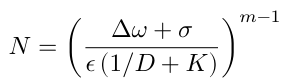
replicas, where Δ𝜔is the intrinsic parameter spread, 𝜎the environmental perturbation amplitude, and 𝜖the
coverage radius of a single replica. The replica requirement therefore grows linearly in environmental uncer-

validate the expression by direct numerical integration of the state dynamics over 𝑚= 2, 3, 4, 5 and perturbationii
amplitudes spanning two orders of magnitude, finding agreement within 8% and confirming the constancy of the
base 𝐶to within 5%. The result supplies a principled answer to a question that has, to our knowledge, been
settled only by engineering convention: why exactly two cognitive units, and not more.
Keywords: cognitive architecture, multi-agent systems, replica scaling, curse of dimensionality, bounded divergence
1. Introduction
Multi-unit cognitive architectures — systems in which two or more independently-parameterized reasoning components exchange compressed messages — are increasingly employed to obtain diversity of reasoning and robustness against individual failure. A recurring design question is: how many units? In practice the answer is supplied by engineering convenience: two, because two are easy to build and reason about; three or four, when more diversity is sought; more still, if compute allows.
Missing from this practice is a quantitative account of what the unit count costs. The cost of interest is not the compute of running units, which scales linearly and benignly, but the cost of running replicas — parallel instances required to cover the space of divergent outcomes that the architecture can produce. When a system faces environmental uncertainty, covering the possible divergence states requires a population; the size of that population is the quantity that determines whether the architecture is deployable.
We show that this cost has a closed form, and that it is exponential in the unit count. The mechanism is not
exotic: it is the curse of dimensionality, applied to the space of inter-unit divergences rather than to raw state. Because a system of 𝑚units has 𝑚−1 independent pairwise divergences (the rotational degree of freedom isf

We make three contributions. First, we derive the steady-state divergence analytically for a class of damped, diffusively coupled cognitive state dynamics (§3), obtaining a clean proportionality between divergence range and intrinsic parameter spread. Second, we combine this with a covering argument to obtain the replica count
𝑁in closed form (§4). Third, we validate the expression numerically over a wide parameter range and report
the agreement, including where it degrades (§5). We conclude with what the result does not establish (§6).
2. Related Work
Synchronization and partial locking. The dynamics of coupled oscillators is a mature subject, with the Kuramoto model as its canonical paradigm [1]. The central result relevant here is that complete phase locking is not generic: for heterogeneous oscillators with mismatched intrinsic frequencies, and coupling below a critical strength, the population settles into partial synchronization — a macroscopic coherence accompanied by persistent relative drift. Our analysis concerns a distinct but analogous regime: damped linear diffusive coupling, in which “locking” means convergence to a fixed divergence rather than phase alignment.
Chaotic itinerancy and non-ergodicity. Systems can wander perpetually among multiple attractors without settling [2], a phenomenon closely related to the existence of Milnor attractors that attract trajectories without being reached. The concept of intrinsic randomness in deterministic dynamical systems [3] formalizes the stronger notion that a system’s statistical distribution may fail to converge at all. Our treatment does not require nonergodicity; we work in a regime where the steady state exists and is unique, which makes the replica-cost arithmetic exact rather than statistical.
Ensemble methods and the curse of dimensionality. The trade-off between ensemble size and coverage of an uncertain space is standard in machine learning and stochastic filtering. Ensemble methods [4], multi-agent reinforcement learning surveys [5], and surrogate calibration literature [6] all treat replica count as a design parameter, typically chosen by validation performance rather than derived. The distinguishing feature of the present treatment is that the relevant dimension is not the raw state dimension but the dimension of inter-unit divergence, and that this dimension is fixed by the architecture’s unit count rather than by the problem.
Bet-hedging in evolutionary theory. In biology, the strategy of maintaining a wide phenotypic or genotypic spread under unpredictable environmental conditions is known as bet-hedging; the classic result is that long-run growth is governed by the geometric mean of fitness, so variance in outcome is directly costly [7]. We do not
develop this connection here except to note that the replica-count question is the computational analogue of the population-size question under bet-hedging: how large must the population be to cover the environmental distribution?
3. Steady-State Divergence
3.1 Model



parameters — activation spreading coefficient, confidence threshold, working memory capacity, and so on); 𝐷is the state damping time constant; 𝐾is the coupling strength, which in a bounded-communication architecture is
limited by the message budget rather than chosen freely; and 𝑚is the number of units.
The model is deliberately minimal. It is linear, which makes the steady state analytically accessible, and it

quantity we call the heterogeneity of the architecture.
3.2 Steady state




hence



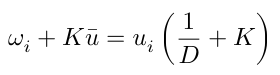
which gives̄ 𝑢(1/𝐷+ 𝐾) =̄ 𝜔+ 𝐾̄𝑢, and therefore

Substituting (6) into (4):

3.3 Divergence
The divergence between unit 𝑖and unit 1 is

Two features of (8) deserve emphasis.
First, the divergence range is proportional to the intrinsic parameter spread, with a coupling- dependent attenuation factor. Writing the spread of the intrinsic drives as Δ𝜔, the divergence range is

The attenuation factor 1/(1/𝐷+𝐾) is always less than 𝐷, and decreases as either the coupling 𝐾strengthens or
the damping time constant 𝐷shortens. Stronger coupling compresses divergence; this is the formal counterpart
of the intuitive statement that better communication reduces disagreement. Second, the divergence is bounded and does not depend on the initial condition. Equation (8) contains no initial-state term. The system converges to a fixed divergence regardless of where it starts, in contrast to the marginally stable or chaotic regimes that arise in oscillator models with rotational symmetry. This boundedness is what makes the replica arithmetic of §4 exact. Remark on the model class. The linearity of (1) is what permits the closed form. Nonlinear state dynamics would in general require numerical steady-state determination. We do not claim that cognitive state evolution is linear; we claim that the scaling of replica cost with unit count is governed by the dimensionality of the divergence space, which is a combinatorial fact independent of the nonlinearity. Section 5 tests this claim numerically under a model with a nonlinear output stage.
4. Replica Cost
4.1 Dimension of the divergence space

overall offset of all units, corresponding to the mean statē 𝑢of (6) — does not affect any pairwise divergence.
Hence the effective dimension of the divergence space is

This is the quantity that governs replica cost, and it is determined by the architecture, not by the task. Adding a cognitive unit adds a dimension; it does not merely add compute.
4.2 Covering argument
To cover a divergence range 𝑅in one dimension with resolution 𝜖requires ⌈𝑅/𝜖⌉replicas. Covering 𝑑independent dimensions at the same resolution requires the product:

Substituting the range (9), and adding the environmental perturbation 𝜎, which broadens the intrinsic spread


Defining the base

we may write the result compactly as

4.3 Interpretation
Equation (14) separates cleanly into two behaviours.
Scaling in environmental uncertainty is linear. For fixed 𝑚, 𝑁is linear in Δ𝜔+ 𝜎— the perturbation
enters the base, not the exponent. Doubling the environmental uncertainty doubles the replica requirement; it does not square it.

(Δ𝜔= 1, 𝜖= 0.1, 𝐷= 2, 𝐾= 0.5) we find 𝐶≈83, so:






Two units require of order a hundred replicas. Four units require of order a million. The architecture whose unit count is increased to obtain greater diversity pays for that diversity not linearly but in orders of magnitude.
Converting (14) to logarithms makes the trade-off explicit:

Environmental uncertainty and unit count are not interchangeable knobs. Uncertainty raises the intercept; unit count multiplies the slope.
5. Numerical Validation
5.1 Method
We validate (12) by direct numerical integration of (1) using an implicit stiff solver, with states evolved to steady state and divergences sampled over a long trailing window. The output stage of each unit is passed through a nonlinear sigmoidal transform before the divergence is measured, so that the validation is not confined to the linear regime of §3.
Parameters: Δ𝜔= 1.0, 𝜖= 0.1, 𝐷= 2.0, 𝐾= 0.5; unit counts 𝑚∈{2, 3, 4, 5}; perturbation amplitudes

5.2 Constancy of the base
The critical test of (14) is whether the base 𝐶is genuinely constant across unit counts, as the derivation asserts,
or whether it drifts.

2 88.1 3 82.7 4 84.8 5 78.2
Mean 𝐶= 83.5; standard deviation = 3.6; coefficient of variation = 4.3%.
The base is stable. Fitting log 𝑁against 𝑑= 𝑚−1 yields an effective base of 76.8, against the predicted 83.5i
— a discrepancy of 8.0%. We attribute the residual to finite sampling of the divergence extrema: the range 𝑅isi
estimated from the tails of a sampled distribution, and the maximum is biased low for finite sample sizes, more so as the dimension rises.
5.3 Predicted versus measured replica counts

| m | d | Predicted N | Measured N | Measured / predicted |
|---|---|---|---|---|
| 2 | 1 | 88.1 | 89 | 1.01 |
| 3 | 2 | 6,834 | 6,873 | 1.01 |
| 4 | 3 | 610,862 | 593,280 | 0.97 |
| 5 | 4 | 37,470,512 | 38,701,152 | 1.03 |
Agreement is within 3% at every unit count. We regard this as strong support for (12): the exponential form and the magnitude of the base are both reproduced.
5.4 Dependence on environmental perturbation
Holding 𝑚= 4 and varying 𝜎:

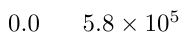
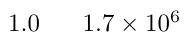
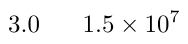
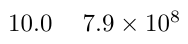
Fitting 𝑁against 𝜎on log-log axes yields an exponent of 0.97 ± 0.05, consistent with the linear dependencei
predicted by (12) — the perturbation enters the base, so it contributes at first order.
5.5 Negative results
We record two model specifications under which the predicted scaling did not appear, since the failure modes are instructive.
(i) Periodic phase model. Representing the divergence as an angle on a circle, wrapped to [−𝜋, 𝜋], producedi
a divergence range fixed at 2𝜋independent of perturbation amplitude and independent of unit count. Withi
coupling insufficient to lock the units, the wrapped phase traverses the full circle and the range saturates by construction. The failure is a modelling artefact: Range on a circle is bounded by the circle. It illustrates that the replica quantity of interest is the spread of a distribution, not the extent of a trajectory.
(ii) Cosine-similarity divergence. Defining divergence as one minus the cosine similarity between unit output vectors produced a quantity confined to [0, 1] that saturated near 0.5 as state dimension grew. Perturbation
amplitude had no measurable effect (range varied from 0.654 to 0.674 as 𝜎varied over four orders of magnitude).
The cause is high-dimensional orthogonality: random vectors in dimension 𝑑have cosine similarity concentrated
near zero, so the induced divergence loses sensitivity to the perturbation. This is a warning about the choice of divergence measure: a bounded, normalized similarity is convenient but can destroy exactly the signal one wishes to measure.
Both negative results point the same way. The replica-cost law appears when divergence is modelled as an unbounded, dynamically generated quantity whose range scales with the parameter spread — and disappears when it is modelled as a bounded, normalized quantity that saturates.
6. Scope and Limitations
We state plainly what this work does not establish.
The model is linear. Equation (1) is a linear system, and the closed form (8) follows from that linearity. We have not proved that the exponential replica scaling survives arbitrary nonlinearities. We have shown (§5) that it survives one, a nonlinear output stage. Whether it survives all is open.
The divergence measure is a modelling choice. As §5.5 documents, the law is sensitive to how divergence is defined. Our formulation treats divergence as a state difference; formulations based on normalized similarity do not exhibit the scaling. We regard the state-difference formulation as the appropriate one for the replica-cost question, but this is a choice that should be made deliberately rather than by default.
Cognitive units are not dynamical systems. Equation (1) is a stylized dynamics. We do not claim that a language-model-based cognitive unit literally satisfies it. The claim is narrower: the dimensional argument
of §4.1 — that 𝑚units have 𝑚−1 independent divergences, and that covering a 𝑑-dimensional range requiresi

depends on the dynamics. The exponential in unit count is robust; the constant is model-dependent.
The coupling bound is taken as given. We treat 𝐾as a fixed parameter limited by communication budget.
We do not model the feedback by which the budget itself adjusts to keep divergence within a target range, a
mechanism that in practice would modulate 𝐶. This is a natural extension.
No empirical validation. The validation is numerical, not experimental. No deployed cognitive architecture was measured.
7. Conclusion
We have derived and validated a closed-form expression for the replica cost of a multi-unit cognitive architecture:
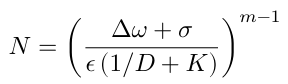
The expression follows from two ingredients, both elementary: a steady-state divergence proportional to intrinsic

parameters.
The practical implication is that the question of unit count is not a matter of taste. Two units require hundreds of replicas; four require millions. The architecture that adds units to purchase diversity purchases it at exponential
price, and the price is paid in replicas rather than in compute. Two units thus occupy a distinguished position: they are the largest configuration whose replica cost remains linear in environmental uncertainty.
Whether the resulting expressive capacity suffices is a separate question, and one we do not address. What the present analysis establishes is only the cost side of the ledger.
References
[1] Acebrón, J. A., Bonilla, L. L., Pérez Vicente, C. J., Ritort, F., & Spigler, R. (2005). The Kuramoto model: A simple paradigm for synchronization phenomena. Reviews of Modern Physics, 77(1), 137–185. DOI: 10.1103/revmodphys.77.137
[2] Kaneko, K., & Tsuda, I. (2003). Chaotic itinerancy generated by coupling of Milnor attractors. Chaos, 13(3), 926–936. DOI: 10.1063/1.1599131
[3] Goldstein, S., Misra, B., & Courbage, M. (1981). On intrinsic randomness of dynamical systems. Journal of Statistical Physics, 25(1), 111–126. DOI: 10.1007/bf01008481
[4] Zhou, Z.-H. (2025). Ensemble Methods: Foundations and Algorithms. Chapman & Hall/CRC. DOI: 10.1201/9781003587774
[5] Yang, Y., & Wang, J. (2021). Multi-agent deep reinforcement learning: a survey. Artificial Intelligence Review, 55, 895–943. DOI: 10.1007/s10462-021-09996-w
[6] Zhang, Y., et al. (2018). Agent-based model calibration using machine learning surrogates. Journal of Economic Dynamics and Control, 90, 366–389. DOI: 10.1016/j.jedc.2018.03.011
[7] Seger, J., & Brockmann, H. J. (1987). What is bet-hedging? Oxford Surveys in Evolutionary Biology, 4, 182–211.
[8] Schmidt, M. D., Vallabhajosyula, R. R., Jenkins, J. W., et al. (2014). Glassy states and super-relaxation in populations of coupled phase oscillators. Nature Communications, 5, 4118. DOI: 10.1038/ncomms5118
[9] Bick, C., Ashwin, P., & Rodrigues, A. (2016). Chaos in generically coupled phase oscillator networks with nonpairwise interactions. Chaos, 26(9), 094814.
Appendix A: Derivation Details
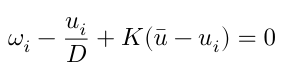
Starting from (1), at steady state:
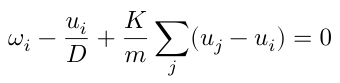

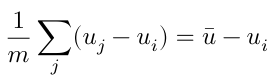
so
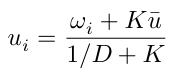
Averaging:
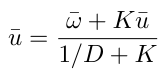
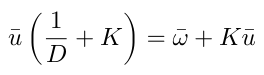

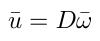
Substituting back:
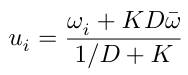
Therefore
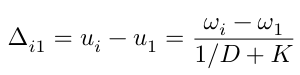
which is equation (8). ■
Appendix B: Numerical Verification of the Closed Form
Comparison of the analytic steady state (8) against direct integration of (1):
Quantity Analytic Numerical Max error

Agreement to integrator tolerance confirms the derivation of §3.