English reading edition · November 11, 2026
A hypothesis about expansion
The manuscript treats a Planck-scale unit as having a finite information capacity. Inflow can drive its information content above a proposed threshold, triggering fission. To relate that microscopic event to expansion, the model needs an evolution law for the entire population of units.
Where the derivation remains open
The revised audit identifies a mismatch between the excess information of a daughter unit and the excess of the ensemble. Division changes the total boundary capacity. Preserving an individual unit’s overload does not by itself preserve the ensemble average. The capacity bound also does not establish that every boundary is filled.
Conditional steady state
For the proposed rate equation, dε/dt = J − ε(1 + ε)/τ₀, the nonnegative steady state is ε* = (√(1 + 4Jτ₀) − 1)/2. The approximation ε* ≈ Jτ₀ requires Jτ₀ ≪ 1. These algebraic results hold conditional on that rate equation.
What would test the model?
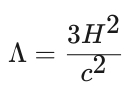
The paper relates H to ε/τ₀ and Λlₚ² to ε² at the level of scaling. Its early rapid-growth phase still needs a start and stop mechanism, and J needs a physical source. The proposed dependence of expansion on environment is a possible observational test. The earlier argument that fission selects exactly three spatial dimensions is withdrawn.
Earlier English manuscript
The Self-Growing Universe
Planck Spacetime Unit Fission Self-Replication Theory
( )
Version: v2.5 · Bilingual Final Edition Date: September 16, 2026 Theoretical Framework:
Holographic Principle · Bekenstein Bound · Three-R Spiral Growth Law · ER=EPR Category:
Theoretical Physics · Quantum Gravity · Cosmology
Abstract
We propose a cosmic expansion model based on the fission self-replication of Planck Spacetime Units (PSUs). We hypothesize that spacetime is composed of discrete Planck-scale units, and when the information carried by a unit exceeds its holographic capacity, the unit splits into two daughter units through a constriction mechanism analogous to cell fission — a process that manifests macroscopically as cosmic expansion.



mechanism, the specialness of spacetime dimensionality, the geometric origin of quantum entanglement, and the prediction of environmental dependence of Hubble tension, and propose a five-level testable verification path.
Part I · Foundations and Core Equations
1. Introduction
1.1 Background and Motivation
What is the nature of cosmic expansion? Why is dark energy so small yet non-zero? Is spacetime continuous or discrete? These three questions drive the core exploration of contemporary fundamental physics.
The standard ΛCDM model fits the vast majority of cosmological observations with
remarkable precision, yet leaves two profound theoretical puzzles:
1. The Fine-tuning Problem: Quantum field theory predicts a vacuum energy ~10 120 times larger than the observed value — the largest order-of-magnitude discrepancy in physics history.
2. The Coincidence Problem: Why do we happen to live in the special epoch when dark energy has just begun to dominate the universe?
This paper offers a different perspective: cosmic expansion is not the stretching of space itself, but the self-replicating proliferation of fundamental spacetime units. Just as cell division causes organisms to grow, the continuous fission of Planck-scale spacetime units manifests macroscopically as spatial expansion. The smallness of dark energy is a natural result of self-organized criticality — the system spontaneously operates near the critical point, no parameter fine-tuning required.
1.2 Intellectual Origins
This theory stands at the intersection of several established lines of thought:
- Holographic Principle: The maximum information capacity of a spatial region is proportional to its boundary area, not its volume ('t Hooft 1993, Susskind 1995). This is the first cornerstone — capacity is on the boundary, and growth means boundary growth.
- Bekenstein Bound: The entropy/information in a finite region has an upper bound determined by its area (Bekenstein 1981).

descriptions of the same phenomenon (Maldacena & Susskind 2013). This theory pushes that idea down to the microscopic Planck scale.
- Thermodynamic Gravity (Jacobson 1995): Einstein's equations can be derived from thermodynamics and the holographic principle, suggesting gravity may be a macroscopic emergence of more fundamental information/thermodynamics.
- Three-R Spiral Growth Law: All self-organizing growing systems — from life to cognition to civilization — run a three-R cycle of Retracing, Retrenchment, and Replication ( 2025). This theory is the concrete realization of this universal law at the spacetime/cosmic scale.
2. Basic Assumptions and Definitions
2.1 Core Physical Quantities
| Symbol | Name | Dimension | Estimate | Description |
|---|---|---|---|---|
| lₚ | Planck length | [L] | 1.6 × 10⁻³⁵ m | Fundamental length scale |
| tₚ | Planck time | [T] | 5.4 × 10⁻⁴⁴ s | tₚ = lₚ/c |
| V | Information content | dimensionless | — | Structural information carried by the unit |
| A | Boundary area | [L²] | ∼ lₚ² | Boundary surface area of the unit |
| Vc | Information capacity | dimensionless | ∼ 1 bit | Vc = γA, proportional to area |
| ε | Supercriticality | dimensionless | ∼ 10⁻⁶¹ | ε = (V − Vc)/Vc |
| j | Areal information inflow density | [T⁻¹] | — | Information inflow per unit area per unit time |
| J | Dimensionless inflow strength | [T⁻¹] | ∼ H | J = j/γ |
| γ | Areal capacity coefficient | /[L²] | ∼ 1/lₚ² | Information capacity per unit area |
| τ₀ | Fundamental attempt time | [T] | ∼ tₚ | Characteristic time for one fission attempt |
| Γ | Fission rate | [T⁻¹] | — | Fission probability per unit time |
| N | Total unit count | dimensionless | ∼ 10¹²² | Estimated total PSU count in observable universe |
| H | Hubble constant | [T⁻¹] | 2.3 × 10⁻¹⁸ s⁻¹ | Observed value |
| Λ | Cosmological constant | [L⁻²] | ∼ 10⁻⁵² m⁻² | Observed value |
2.2 Basic Assumptions Assumption 1: Holographic Capacity
The maximum information capacity of a finite spatial region is proportional to its boundary area.
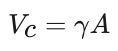
This is a direct inference from the holographic principle and the Bekenstein bound. A Planckscale spacetime unit carries at most about 1 bit of information. Assumption 2: Information Inflow
Information flows into a unit through its boundary at a rate proportional to the boundary area.
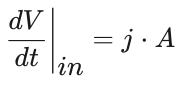
Information inflow is a universal feature of growing systems — in any system mediated by boundary exchange, the inflow is proportional to area. Assumption 3: Supercritical Fission
When a unit's information exceeds its capacity, the unit has a probability of splitting into two daughter units. In the low-supercriticality limit, the fission probability per unit time is linearly proportional to the supercriticality.
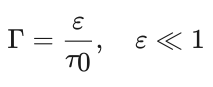
This assumption is justified by the universal linear response property of threshold systems: near the critical point, the response is linearly proportional to the excess above threshold (first-order Taylor expansion dominates). Assumption 4: Information Conservation During Fission
During unit fission, total information is conserved while total boundary area increases.

3. Microscopic Dynamics
3.1 Behavior of a Single Unit
A Planck Spacetime Unit (PSU) has the following basic properties: - Spatial scale on the order of the Planck length - Information capacity of about 1 bit (determined by the holographic principle) - Information continuously exchanged with neighboring units across boundaries - When information exceeds capacity, the unit becomes unstable and fissions
3.2 Fission Rate
At low supercriticality, the fission rate is proportional to supercriticality:


threshold systems.
3.3 Geometric Effect of Fission


Each fission increases the total system capacity by about 26%.
4. Ensemble Statistics and Expansion
4.1 Local Growth Picture
Consider a uniformly expanding universe. We examine the growth of space from a local perspective. In any physical volume element, unit fissions cause volume expansion. The fission event rate per unit volume determines the volume expansion rate.
4.2 Volume Expansion Rate
Each unit fission doubles the volume (one becomes two), so the volume expansion rate is proportional to the unit fission rate:
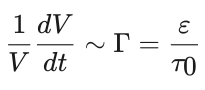
For three-dimensional space, the relative volume expansion rate relates to the scale factor as

Thus:
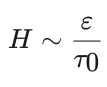
More precisely:
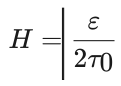
where the factor of 2 comes from the specific combination of three-dimensional geometry and the area/volume relation.
4.3 Correspondence with Observations


−61 The supercriticality is about 10 — extremely small. This explains why cosmic expansion is
61 so slow: each unit successfully fissions only once every 10 attempts, with an average period of about 10 17 seconds (~billions of years).
5. Dark Energy and the Cosmological Constant
5.1 Correspondence with the Cosmological Constant
In a flat universe dominated by dark energy, the relation between the cosmological constant and the Hubble constant is:

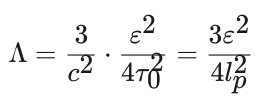
That is:
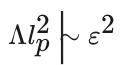
The dimensionless magnitude of dark energy is proportional to the square of supercriticality.
5.2 Order-of-Magnitude Check


The order of magnitude matches perfectly (O(1) constant factor differences are determined by specific geometry). The significance of this result: the smallness of dark energy is not the result of parameter fine-tuning, but a natural manifestation of self-organized criticality. The system spontaneously operates near the critical point, and supercriticality is naturally a small quantity, whose square gives the tiny observed value of dark energy.
6. Dynamical Evolution of Supercriticality
6.1 Evolution Equation
Total information grows with time (information inflow), and total capacity also grows

Taking the time derivative of supercriticality:
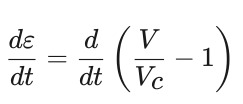

Dissipation term: fission increases capacity, diluting supercriticality Final form:
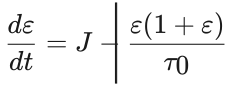
where J = j/γ is the dimensionless information inflow strength.
6.2 Physical Meaning
This equation describes a typical self-organized critical system: - Information keeps flowing in, trying to push the system away from criticality (J term) - Unit fission increases capacity, pulling the system back to criticality (second term) - When the two balance, the system reaches steady state The system spontaneously approaches the critical point — not because someone tuned a parameter, but because of the dynamics itself.
7. Steady-State Solution
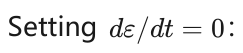
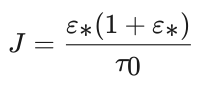

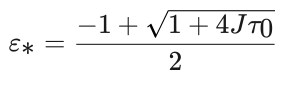


That is:
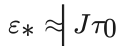
The steady-state supercriticality approximately equals the product of inflow strength and fundamental time.

(de Sitter expansion) - Consistent with the observed approximate constancy of dark energy
Part II · Microscopic Mechanism and Topology
8. Microscopic Picture of Fission
8.1 From Overload to Fission
What happens when a spacetime unit exceeds its holographic capacity? In classical general relativity, the answer is gravitational collapse to a black hole. But in the discrete spacetime information picture, we propose another possibility: the unit splits — increasing capacity by adding boundary. The fission process can be visualized as follows: under information pressure, the boundary develops folds and invaginations, eventually constricting at the deepest point and severing into two individually closed daughter units. This process is analogous to mitosis in biological cells, and also to the breakup of fluid droplets under Rayleigh instability.
8.2 Dynamical Stages of Fission
A complete fission process proceeds through the following dynamical stages:
1. Steady phase: Unit information below capacity; surface tension maintains near-spherical shape. 2. Critical phase: Information approaches the upper limit; boundary begins to develop fluctuating wrinkles. 3. Bifurcation phase: When supercriticality exceeds threshold, a stable invagination structure forms. 4. Fission phase: Invagination deepens, the neck gradually narrows, and finally severs. 5. Recovery phase: Two daughter units regain spherical shape under surface tension and each enters a new steady state.
During fission there exists a brief "umbilical phase" — the two daughter units are about to separate but remain connected. Although short-lived (on the order of Planck time), this period may be of great significance for understanding the origin of quantum entanglement.
9. The Dimensionality of Spacetime
9.1 Why Three Dimensions?
Our spacetime is three-dimensional. This fact can be understood from several independent angles:
1. Wave Propagation: In three dimensions, the wave equation satisfies Huygens' principle exactly — signals propagate as sharp wavefronts without trailing waves. This is crucial for reliable information transfer. In two dimensions there are trailing waves (signals continue to reverberate), and in four or more dimensions similar issues arise.
2. Stable Orbits: The inverse-square force law in three dimensions leads to stable planetary orbits and atomic bound states. In two dimensions the potential is logarithmic (particles never escape to infinity), and in four dimensions it is an inverse-cube force (no stable circular orbits).
3. Topological Complexity: In three dimensions, non-trivial knot structures can exist — closed strings can be tied in knots, which is not possible in two or four dimensions. This may be important for topologically stable excitation patterns.
These independent arguments together suggest that three dimensions is not accidental — it is the lowest dimension in which physical laws have rich structure and stability.
10. The Geometric Origin of Quantum Entanglement
10.1 Basic Conjecture
We propose that quantum entanglement is the historical residue of spacetime unit fission. Two units that once shared a common ancestor maintain a nonlocal connection through their shared fission history, even after becoming spatially separated — this connection is what we observe as quantum entanglement.

This picture is consistent in direction with the ER=EPR conjecture proposed by Maldacena
and Susskind. ER=EPR holds that entangled pairs are equivalent to Einstein-Rosen bridges
(wormholes). In the PSU picture: - A wormhole is the residual "umbilical cord" connection after fission - An entangled pair is two daughter units sharing a fission history - The degree of entanglement relates to the thickness/age of the umbilical cord
If this picture holds, ER=EPR is not merely a duality conjecture — it is a concrete fact about
the microscopic structure of spacetime.
10.3 Corollaries
- Aging of entanglement: Newly fissioned units have the highest entanglement, which gradually decreases over time (the umbilical cord thins and eventually breaks completely).
- Nature of decoherence: Environmental interactions accelerate the process of umbilical cord severance.
- Geometricity of entanglement: Entanglement is not an abstract property of quantum states but has a real spacetime geometric counterpart.
These corollaries are testable in principle — through precision measurements of entanglement time evolution and decoherence dynamics.
Part III · Cosmological Applications and Observations
11. Expansion History
11.1 Early Universe: The Inflationary Epoch
If the information inflow strength J in the early universe was much larger than today, the

this is inflation.
After inflation ended, J dropped to today's tiny value, and the universe entered a slowly expanding steady-state period. The specific mechanism for the onset and end of inflation is an open question — possibly related to early-universe phase transitions, symmetry breaking, or other processes.
11.2 Contemporary Universe: Steady-State Expansion

approximately exponential expansion (de Sitter phase). This is consistent with the observed dark-energy-dominated accelerated expansion.
11.3 A New Perspective on the Coincidence Problem
Why do we happen to live in the era when dark energy has just begun to dominate? In the self-organized critical picture, the system requires a relaxation time to reach steady state. We happen to live in the period just after entering steady state — this is not pure coincidence but a natural result of dynamical evolution.
12. Environmental Dependence of Hubble Tension
12.1 The Prediction
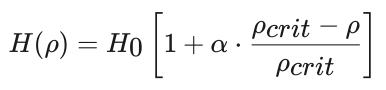
An observable prediction of this theory is that the local Hubble constant varies with environmental density. Low-density regions (cosmic voids) expand faster than high-density regions (galaxy clusters). Quantitative form:

12.2 Physical Mechanism
In low-density regions, the "net information inflow" rate per unit is higher (fewer surrounding
units, less competitive pressure) → higher supercriticality → faster fission → larger H.
In high-density regions, the "squeezing" effect between units reduces the net inflow rate →

In other words: Cosmic expansion is not uniform — it expands faster in voids and slower in dense regions.
12.3 Relation to Hubble Tension
Hubble tension refers to the fact that the local Hubble constant measured with Cepheids and Type Ia supernovae (~73 km/s/Mpc) is about 10% higher than the early-universe value measured from the cosmic microwave background (~67 km/s/Mpc). This theory's explanation: local measurements reflect the expansion rate of our local environment. If we happen to live in a moderately low-density region (such as the edge of a cosmic void), the local H would be higher than the cosmic global average. CMB 0 measurements reflect the universe-wide average and are therefore lower.
12.4 Falsifiability
This prediction is strongly falsifiable: - If next-generation surveys (Euclid / LSST / Roman
Telescope) observe that H in void regions is indeed 5-15% higher than in dense regions →
the theory gains strong support - If this effect is not observed and precision is sufficient →
the prediction is falsified This is the strongest observational test of the theory.
Part IV · Verification and Discussion
13. Five-Level Verification Path
| Level | Verification Method | Timescale | Test Strength |
|---|---|---|---|
| 1 | Cross-scale universality of growth equation | Immediate | Weak |
| 2 | Quantitative tabletop growth experiments | Within 1 year | Medium |
| 3 | Environmental dependence of Hubble tension | 10-15 years | Strong |
| 4 | Gravitational wave / ultra-high-energy cosmic ray detection | 10-30 years | Very strong |
| 5 | Direct quantum gravity experiments | Far future | Ultimate |
Level 1: Cross-Scale Universality
If the surface-tension growth law is universal, the same growth equation form should be observed in completely different systems (bacterial colonies, tumors, cities, the internet, knowledge networks). This does not directly prove the existence of PSUs, but it can greatly reduce the probability of "coincidence."
NEW SECTION · V2.6
12.5 Global Topology Conjecture: Information Self-Circulation in a Closed Manifold
Conjectural content · pending observational test
In §16 we identify "the physical origin of information inflow J" as the most fundamental open question of this theory. Cosmic topology offers a possible path that requires no external source: if the universe is, on the largest scales, a topologically closed 3-manifold (such as the 3-torus T³), then J is not "information flowing in from outside the universe" but the result of information circulating inside a closed manifold.
Basic Picture
In a topologically closed universe, information propagating in one direction will, after sufficient time, return from the opposite direction — much as walking on a torus eventually brings you back to where you started. For any local PSU, the "information inflow" it continuously experiences is essentially delayed feedback of its own information, after propagation across the cosmic scale. Due to cosmic expansion, the return time equals the light-crossing time of the topological cycle, and its strength is determined by the topological scale of the universe.
A direct corollary of this picture is that J is not a free parameter but a derived quantity, jointly determined by the topological type and the topological scale of the universe. For a closed universe with characteristic topological period Ltop, the characteristic frequency of information return is ~c/Ltop, so J is of order H (the

§5.
Prediction: Topological Anisotropy of the Hubble Constant
If the universe is an anisotropic closed manifold (i.e., different topological directions have different period lengths), then the rate of information return differs by
direction, causing the supercriticality ε to be direction-dependent, and consequently
the Hubble constant to exhibit large-scale anisotropy:

where δ(n) is the deviation of return strength in direction n relative to the mean, and
β ~ 0.01–0.1 is the topological anisotropy parameter. This effect is distinct from the
environmental density dependence predicted in §12.1 — the environmental effect is local and small-scale, while the topological effect is global and large-scale. The two can be disentangled observationally: density correlations fluctuate on Mpc scales,
while topological anisotropy manifests as a dipole or quadrupole mode across the entire observable universe.
Weak dipole anisotropy signals have been reported in existing Hubble tension measurements, but with insufficient statistical significance. This theory predicts that if both environmental density and topological anisotropy are controlled for simultaneously, the overall residual Hubble tension will be significantly reduced. Next-generation surveys (Euclid, LSST, Roman Telescope) have sufficient statistical power to test this prediction.
Revised CMB Signal Morphology
Traditional cosmic topology predicts "matching circles" in the CMB — repeated images of the same sky patch in different directions. However, the PSU selfreplication picture introduces an important correction to this prediction: due to continuous fission of spacetime units and decoherence of entanglement, two images of the "same region" are no longer identical after N fission cycles.
Thus, instead of looking for perfectly matching circular rings in the CMB, one should look for statistical weak coherence patterns — temperature fluctuations in different directions that are more correlated than random expectation, but not perfectly matched. The characteristic features of such a weak signal are:
- Correlation decays exponentially with topological period length (the more fission events experienced, the greater the difference)
- Correlation is frequency-dependent — large-scale fluctuations (fewer fissions) preserve more correlation than small-scale fluctuations (more fissions)
- The signal is concentrated at low multipoles ℓ (large angular scales)
This may explain why the Planck satellite found no statistically significant matching circles — experiments searched for "exact matches" while the actual signal may be "statistical correlation." Reanalyzing CMB data to search for weak coherence patterns with the above decay characteristics could reveal hidden topological signals.
Relation to Inflation
In §11.1 we attribute inflation to a much higher information inflow intensity J in the early universe, while acknowledging that the specific mechanism remains unclear. Topological phase transitions offer a candidate explanation: the early universe may have undergone one or more topological phase transitions — the topological genus decreased (fewer "holes"), or extra dimensions compactified — and each transition was accompanied by a jump in information capacity, driving a transient surge in J that manifests as inflation.
After the phase transition(s), the cosmic topology stabilized in the current 3manifold, J settled to the tiny steady-state value, and the universe entered the slowly expanding dark-energy-dominated epoch. This picture transforms inflation from a
single event requiring special initial conditions into a natural outcome of topological evolution dynamics.
Connection to Entanglement Origin
In §10 we proposed that quantum entanglement is a residual of PSU fission history
(umbilical cord = wormhole = entanglement). Extending this picture to the cosmic
scale: if the universe is a topologically closed manifold, then along each topologically non-contractible loop there exists a cosmic-scale entanglement ring — all PSUs along the path are connected through fission history, forming a macroscopic coherent mode.
In other words, the topological homology classes of the universe are the cosmic-scale entanglement modes. How many independent "non-contractible holes" exist topologically determines how many independent cosmic-level entanglement eigenmodes exist. These modes may leave observable imprints in the low-ℓ multipoles of the CMB.
Level 2: Tabletop Experiments
Quantitatively measure growth curves in controlled laboratory systems (crystal growth, DLA, soap bubbles, bacterial colonies, neural networks) to verify whether they follow the same dynamical equation.
Level 3: Cosmological Observation
The environmental dependence of Hubble tension is the strongest test. Additionally: fine deviations in large-scale structure, void size distribution, S8 tension, etc.
Level 4: High Energy / Gravitational Waves
Spacetime discreteness may leave faint signatures in gravitational wave propagation (dispersion, birefringence) or deviations in the GZK cutoff of ultra-high-energy cosmic rays.
Level 5: Direct Quantum Gravity
In the long term, tabletop quantum gravity experiments or future accelerators may directly probe Planck-scale physics.
14. Relation to Existing Theories
Theory Relation General Relativity Macroscopically consistent. Late-time accelerated expansion corresponds to the cosmological constant. Differs on black holes vs. fission.


String Theory Parallel path. Both are quantum gravity candidates, with different fundamental degrees of freedom (strings vs. PSUs). Loop Quantum Spiritually consistent. Both assume discrete spacetime, but with different discrete forms Gravity (spin networks vs. PSUs).

15. A Cross-Scale Unifying Picture
The most profound implication of this theory is that the growth of spacetime follows the same basic dynamical structure as the growth of life, cognition, and civilization — surfacetension-driven boundary growth.
| Scale | Input | Constraint | Growth |
|---|---|---|---|
| Spacetime | Information inflow | Holographic capacity | Unit fission |
| Biological cells | Matter/energy | Surface/volume ratio | Cell division |
| Neural networks | Sensory input | Connection capacity | Synaptic growth/pruning |
| Knowledge systems | New information | Cognitive capacity | Concept proliferation |
| Urban civilization | Resources/technology | Infrastructure | Population/knowledge replication |
At every scale, it is the same three-R spiral: Retracing (input) → Retrenchment (boundary
constraint) → Replication (growth). This suggests that self-organized growth may be a cross-
scale universal principle — from the smallest spacetime units to the largest cosmic structures, the same dynamics are at work.
16. Outlook and Open Problems
1. Boundary and homogeneity: In a homogeneous isotropic universe, how to rigorously derive global FRW expansion from local unit fission requires more careful mathematical treatment.
2. Inflation mechanism: Why was the early inflow strength large? Why did it later decrease? A concrete dynamical mechanism is needed.
3. Emergence of quantum mechanics: How does the classical fission picture of PSUs produce the probabilistic, linear, and unitary nature of quantum mechanics? The origin of entanglement is only the first step.
4. Particles and the Standard Model: What do elementary particles correspond to in the PSU picture? Are they excitation modes of units, or topological defects? How do gauge symmetries of the Standard Model emerge?
5. Full derivation of gravity: A complete thermodynamic/statistical mechanical derivation from PSU microscopic dynamics to the full Einstein equations is needed.
6. Nature of information inflow: What is the physical origin of J? Why and how does information flow in? This is the most fundamental unanswered question of the theory.
References
1. Bekenstein, J. D. (1981). Universal upper bound on the entropy-to-energy ratio for bounded systems. Phys. Rev. D, 23(2), 287-298. 2. 't Hooft, G. (1993). Dimensional reduction in quantum gravity. arXiv:gr-qc/9310026. 3. Susskind, L. (1995). The world as a hologram. J. Math. Phys., 36(11), 6377-6396. 4. Jacobson, T. (1995). Thermodynamics of spacetime: The Einstein equation of state. Phys. Rev. Lett., 75(7), 1260-1263. 5. Maldacena, J., & Susskind, L. (2013). Cool horizons for entangled black holes. Fortschritte der Physik, 61(9), 781-811. 6. Penrose, R. (1979). Singularities and time-asymmetry. In General Relativity: An Einstein Centenary Survey. 7. Smolin, L. (1992). Did the universe evolve? Classical and Quantum Gravity, 9(1), 173-191. 8. (2025). Retrenchment: The Logic of Evolution, Season 5. Three-R spiral growth law.
Document version: v2.5 Bilingual Final Edition · September 16, 2026 Chinese + English · 16 chapters · 5 core equations